How to Build a Quiet Home Gym in a Condo or Basement
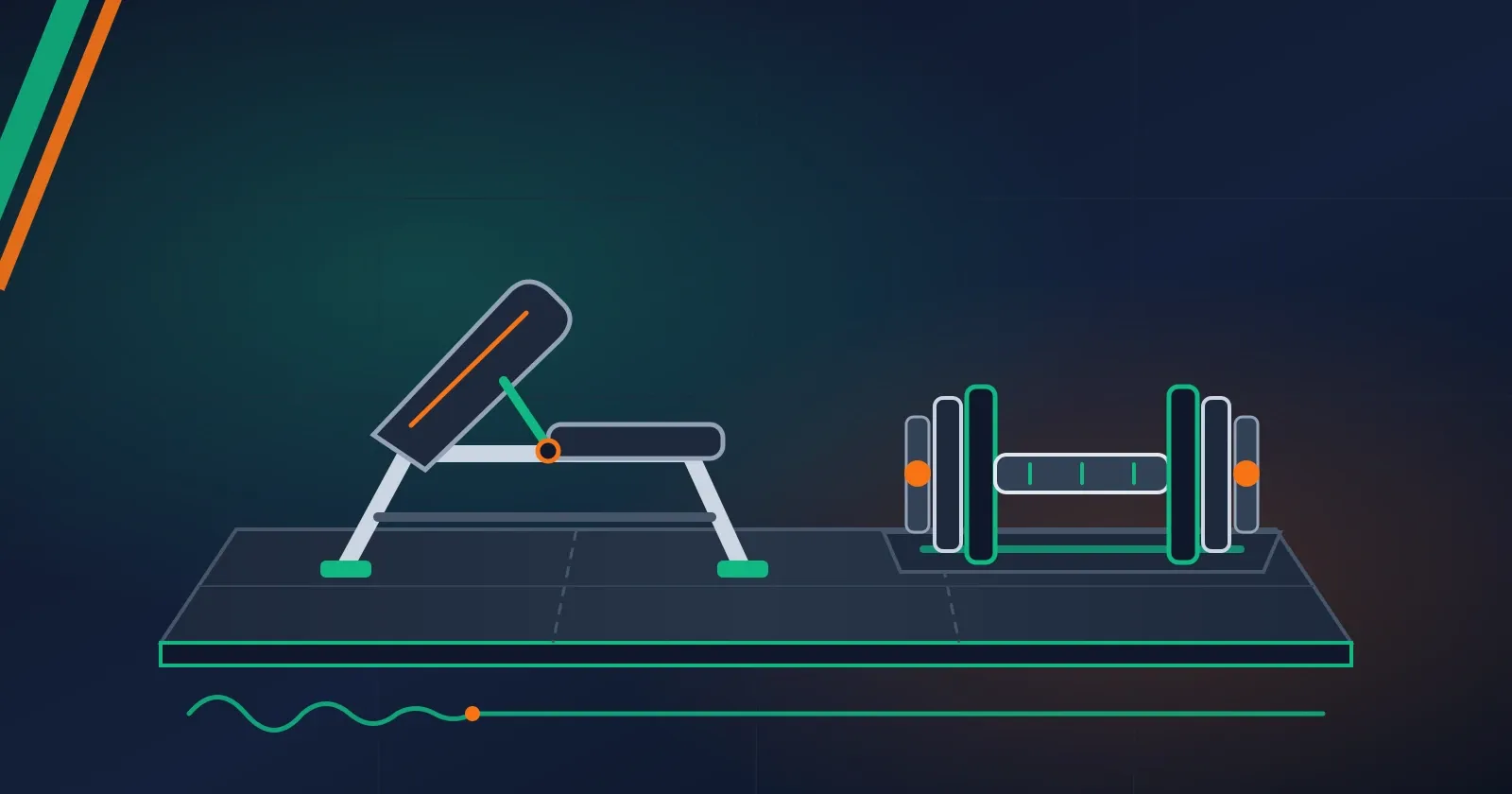
In a Canadian condo, apartment, or duplex basement, the biggest obstacle to a home gym is rarely square footage — it is structure-borne vibration travelling through wooden floor joists or thin concrete slabs. One cast-iron dumbbell dropped carelessly or a wobbly bench leg echoes two floors below.
This step-by-step guide walks through setting up a compact, foldable, genuinely quiet strength training corner in 24 to 48 square feet, with zero monthly subscriptions and concrete gear sold on Amazon.ca.
Gear Prerequisites (A Quiet 3-Piece Foundation)
You do not need a 300 lb power rack to train effectively at home. Three well-chosen pieces cover 90% of strength movements (presses, rows, Bulgarian split squats, lunges, shoulders, arms) without annoying your neighbours — as long as you know their real trade-offs.
1. Flooring: 1/2-Inch Hybrid Rubber-Top EVA Tiles
Cheap 3/8-inch pure EVA foam compresses permanently under weight bench legs within months. A hybrid tile — a dense speckled rubber top bonded to a 1/2-inch (12.7 mm) high-density EVA base — absorbs light impact noise while keeping your footing stable.
ProsourceFit Rubber Top / EVA Puzzle Mat (1/2-inch)
Rubber Top + EVA • 1/2 inPros
- Slip-resistant speckled rubber top layer is far more durable and stable under load than bare EVA foam.
- Interlocking 24 × 24 in tiles (24 or 48 sq. ft. packs) install and remove cleanly in rental apartments.
- Protects hardwood and laminate flooring from scratches while dampening everyday equipment vibration.
Cons
- Noticeable rubber odour for the first 3 to 5 days: needs airing out before setting up in a closed bedroom.
- Not built for dropping heavy barbells or deadlifts — 1/2-inch hybrid EVA bottoms out under violent impacts.
- Interlocking seams can drift slightly apart if you slide heavy gear sideways instead of lifting it.
2. Weights: Quiet Coated Adjustable Dumbbells
In an apartment, skip raw cast-iron spin-lock dumbbells: loose plates clang on every rep and weight changes kill your momentum. The Bowflex SelectTech 552 replaces 15 pairs of dumbbells (5 to 52.5 lb / 2.3 to 23.8 kg per hand) in one compact tray, with thermoplastic-molded plates that eliminate metal clanking.
Bowflex SelectTech 552 Adjustable Dumbbells (5–52.5 lb)
5–52.5 lb • Quiet Coated PlatesPros
- Molded thermoplastic around steel plates eliminates loud metal-on-metal clanking between reps.
- 2.5 lb increments from 5 to 25 lb (then 5 lb steps up to 52.5 lb) make progression smooth on isolation lifts.
- 3-second dial weight swaps with zero subscriptions or electronics.
Cons
- Fixed 16.9-inch (43 cm) length even when set to 5 lb feels bulky on curls and overhead work.
- Plastic internal locking tabs will break if dropped: zero dropping allowed on condo floors.
- Expensive in Canada (typically around $450 to $600 CAD per pair depending on sales).
3. Support: Multi-Angle Folding Weight Bench
A bolted commercial bench takes over a small room. A folding bench like the FLYBIRD collapses in 15 seconds to roughly 31.5 × 12.6 × 11.8 inches to slide under a bed or into a hallway closet, while still covering flat, incline, decline, and upright pressing.
FLYBIRD Adjustable Folding Weight Bench
Folding • Multi-Angle • SteelPros
- Arrives mostly pre-assembled and folds flat quickly with pull-pins for tight condo storage.
- Covers flat, incline, decline, and 90° upright positions with a 600 to 800 lb rated frame depending on variant.
- Rubberized foot caps help prevent squeaks and sliding on gym floor tiles.
Cons
- Narrow ~10-inch (25 cm) backrest on the standard model can feel tight for broader shoulders.
- Slight side-to-side wobble if placed on overly soft foam tiles.
- Medium-density vinyl padding compresses faster than a fixed commercial bench.
Step-by-Step: Setting Up Your Quiet Home Gym
Step 1: Pick the Structurally Quietest Spot
In a wood-framed condo or apartment, avoid setting up in the dead centre of a large room where floor joists flex like a drumhead. Place your mat along a load-bearing exterior wall or structural partition, where floor bounce is lowest. In a basement, set up directly over the concrete slab away from sump pumps or water heaters.
Step 2: Decouple the Floor Without Damaging It
- Vacuum thoroughly first — grit trapped under exercise mats acts like sandpaper on hardwood or laminate.
- On pale vinyl plank (LVP) flooring in rentals, check that black rubber undersides will not stain the finish over time (a thin breathable underlayment solves this).
- Lay out 6 tiles (24 sq. ft.) for a tight bench-and-dumbbell footprint, or 12 tiles (48 sq. ft.) if you want space for lunges, core work, or a compact cardio machine.
Step 3: Level the Bench Feet to Eliminate Thuds
Tighten every bolt before your first session and check that all four bench feet sit flush. Many Canadian basements slope slightly toward a floor drain: even a 3 mm wobble creates loud thumping sounds on every rep. Slip a thin dense rubber shim under the low foot until the frame is rock solid.
Step 4: Use “Zero-Drop” Lifting Habits
Even thick mats cannot hide sloppy habits:
- Kick dumbbells back onto your thighs when finishing a bench press set, stand up smoothly, and lower them gently into their cradles.
- Skip high-impact plyometrics (box jumps, jumping burpees) on upper floors — swap in tempo squats, split squats, or low-impact cardio. If you plan to add compact indoor cardio later, read our comparison of the best foldable treadmills without a subscription for quiet Bluetooth FTMS picks.
Step 5: Control Basement Humidity (Canadian Summers)
Unconditioned Canadian basements regularly cross 65% relative humidity in July and August. That quickly rusts steel dumbbell handles and bench pins, and traps moisture under puzzle tiles. Run a dehumidifier around 45–50% RH, lift a corner tile once a season to check for condensation, and wipe down bench vinyl after every session.
4 Common Mistakes to Avoid
- Buying bargain 10 mm pure EVA mats: they shift underfoot, dent permanently under bench legs, and tear at the puzzle seams within weeks.
- Misreading bench weight ratings: the 600–800 lb rating includes both your body weight and the dumbbells under static load. If you weigh 210+ lb and lift heavy, choose the reinforced 800 lb variant.
- Ignoring low basement ceilings: many older Canadian basements have 7-foot (2.13 m) ceilings — standing overhead presses quickly hit drywall or bulkheads, so switch to seated 85° incline presses.
- Skipping vibration isolation under cardio gear: if you later add a spin bike or folding treadmill over laminate flooring, always place a dedicated high-density mat under all contact points to stop low-frequency motor hum from travelling through the floor.
Frequently asked questions (FAQ)
Are EVA foam puzzle mats enough to block gym noise in a condo?
For bodyweight workouts, controlled dumbbell sets, and a folding bench, 1/2-inch hybrid rubber-top EVA tiles dampen light impact noise well and protect laminate or hardwood floors. However, they are not thick enough for dropping loaded barbells on deadlifts — that requires 3/4-inch solid vulcanized rubber.
Why are coated adjustable dumbbells quieter than standard spin-lock weights?
Cast-iron spin-lock dumbbells rattle whenever a plate loosens slightly and clang loudly when set down. Thermoplastic-coated selectorized dumbbells like the Bowflex SelectTech 552 eliminate nearly all metal-on-metal noise, provided you always set them down under control.
How do I get rid of new rubber mat odour in a Canadian basement?
Recycled or hybrid rubber tiles often off-gas a noticeable rubber smell for 3 to 7 days. Unpack them in a garage, on a balcony, or near an open window with a fan, and wipe them down with mild dish soap and a damp cloth before laying them out.
What is the minimum floor space needed for a functional apartment home gym?
A 6 by 8 foot footprint (48 sq. ft., or roughly 1.8 x 2.4 metres) easily fits a folding incline bench, a pair of adjustable dumbbells, and resistance bands. Everything folds up against a wall or inside a closet in under two minutes.